If you need a commercial espresso machine that handles high volume with ease, consider the F11 Big Plus Automatic Espresso Machine—it brews up to 100 cups daily and features a smooth Latte Go Milk System.
The Commercial 2-Group Stainless Steel Espresso Machine offers durability and precision with dual boilers. For variety, try the F11 Big Plus Super Automatic with 24 coffee options. Each machine balances capacity, quality, and ease of maintenance. Keep exploring to find out what else matters most in your choice.
F11 Big Plus Automatic Espresso Machine with Milk System
No products found.
If you run a busy office, hotel, or convenience store, the F11 Big Plus Automatic Espresso Machine with Milk System is designed to keep up with your demand, brewing up to 100 cups a day with ease. You can offer 24 hot and cold coffee varieties, from rich espressos to creamy lattes, all customizable with nine grind size options.
Its Latte Go Milk System delivers silky smooth froth, compatible with plant-based alternatives. The 8L water tank connects to tap or bottled water, while the fully automatic cleaning system, including daily milk flushing, guarantees hassle-free maintenance. This machine blends efficiency with quality perfectly.
Best For: Businesses such as offices, hotels, and convenience stores that require a high-capacity, versatile coffee machine capable of serving up to 100 cups daily with a variety of coffee options.
Pros:
- Offers 24 hot and cold coffee drink varieties with customizable grind sizes.
- Features a Latte Go Milk System compatible with plant-based milk alternatives for smooth froth.
- Includes a large 8L water tank and fully automatic cleaning system for easy maintenance.
Cons:
- May be too large or complex for small-scale or home use.
- Requires daily milk system flushing to maintain hygiene.
- Initial investment cost could be high for small businesses or startups.
Commercial 2-Group Espresso Machine, Stainless Steel
No products found.
Businesses aiming to serve high volumes of coffee will appreciate the Commercial 2-Group Espresso Machine’s stainless steel build and semi-automatic precision. This 220-volt, heavy-duty appliance features dual 550 ml coffee boilers and a 5.5-liter stainless steel steam boiler, ensuring consistent performance. Its volumetric control and high-pressure rotary vane pump deliver precise, high-quality espresso shots every time.
You’ll find LED side and rear lights helpful during busy hours. Installation requires professional plumbing and electrical work, so consult a certified technician. Ideal for restaurants, hotels, and coffee shops, this machine enhances your coffee service with durability and efficiency.
Best For: Businesses such as restaurants, hotels, and coffee shops that require a heavy-duty, high-volume espresso machine with precise control and durability.
Pros:
- Durable stainless steel and copper construction ensures long-lasting performance.
- Dual coffee boilers and a large steam boiler support high-volume, consistent espresso production.
- Volumetric control and LED lighting enhance precision and ease of use during busy service hours.
Cons:
- Requires professional installation for electrical and plumbing connections, not suitable for DIY setup.
- Heavy weight (119 pounds) and large dimensions necessitate freight shipping and adequate space.
- Operates only on 220 volts, limiting compatibility with standard household outlets.
F11 Big Plus Super Automatic Espresso Machine Black
No products found.
The F11 Big Plus Super Automatic Espresso Machine Black stands out as a perfect match for those who need a versatile coffee maker with a large capacity. You’ll enjoy 24 coffee options, from espresso to iced americano, all brewed to your taste with 9 grind size settings.
Its 8L water tank supports busy environments, connecting easily to a tap or bottle. The touchscreen lets you customize strength and froth effortlessly, while the auto-clean system saves you time. Compact yet powerful, this machine fits well in commercial settings, delivering consistent quality with minimal hassle.
Best For: Busy coffee lovers and small businesses seeking a versatile, high-capacity, fully automatic espresso machine with customizable options and easy maintenance.
Pros:
- Offers 24 coffee varieties and 9 grind settings for personalized brewing.
- Large 8L water tank that can connect to a tap or bottle, ideal for commercial use.
- Fully automatic cleaning system and touchscreen interface for convenience.
Cons:
- Relatively heavy at 48 pounds, which may limit portability.
- Customer reviews average only 3.4 out of 5 stars, indicating mixed satisfaction.
- Not dishwasher safe, requiring manual cleaning of some components.
Factors to Consider When Choosing a Commercial Automatic Espresso Machine
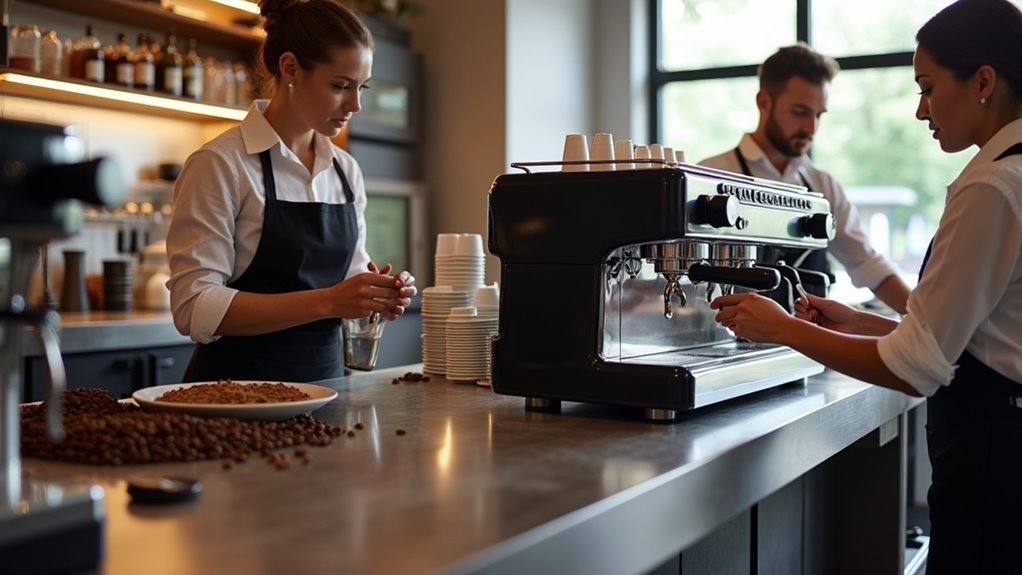
When you’re picking out a commercial automatic espresso machine, think about how many drinks it’ll need to make and the range of coffee options it provides. You’ll also want to check out the milk system features.
And don’t forget to consider how easy the machine is to clean and maintain — that can save you a lot of time and hassle. Plus, take a close look at the build quality and materials to make sure it’s built to last.
Machine Capacity Needs
Since your espresso machine needs to keep up with daily demand, you’ll want to contemplate how many cups it can produce each day. Some commercial models handle around 100 cups daily, ideal for busy offices or hotels. Next, check the water tank size—an 8L capacity lets you serve continuously without constant refills.
Also, consider how the machine connects to water: direct tap connections simplify setup, while bottled water setups might limit placement. Don’t forget to evaluate your available space; commercial machines can be quite large and heavy, so measure carefully before choosing. By matching capacity needs with water source options and space constraints, you’ll guarantee smooth service without downtime or inconvenience in your establishment.
Coffee Variety Options
Balancing your machine’s capacity with the types of coffee it can serve helps you meet both volume and variety demands. When choosing a commercial automatic espresso machine, consider how many coffee drinks it can produce—espresso, cappuccino, latte, iced coffee, and more. Machines offering up to 24 drink options let you cater to diverse tastes, attracting a wider audience. Customizable grind size is essential, too, as it lets you adjust coffee strength and flavor profiles to satisfy individual preferences.
Also, check if the machine supports plant-based milk alternatives, expanding your menu for non-dairy customers. While milk system features matter, focus here on ensuring your machine’s coffee variety options align with your customer base’s expectations to enhance satisfaction and sales.
Milk System Features
Although selecting a commercial automatic espresso machine involves many factors, the milk system features play a crucial role in delivering high-quality beverages. You want a machine that produces silky smooth milk froth to improve textures and flavors in cappuccinos and lattes. Make sure it’s compatible with plant-based milk alternatives to cater to diverse customer preferences.
Look for user-friendly systems like “Latte Go” that simplify steaming and texturing, perfect for baristas of all skill levels. Also, consider the milk system’s capacity to handle high-volume demands efficiently. While automatic cleaning features are helpful, they mainly impact maintenance, so focus now on how the milk system supports your service speed and drink quality to impress every customer consistently.
Cleaning and Maintenance
The quality of your milk system won’t matter much if your espresso machine isn’t properly cleaned and maintained. You’ll want a machine with a fully automatic cleaning system to cut down on maintenance time, so you don’t have to disassemble parts daily. Remember to flush the milk system every day to keep it hygienic and guarantee your milk froth tastes great.
Machines with removable components like water tanks and milk systems make cleaning much easier. Regular tasks such as descaling and cleaning brew groups are essential to keep your machine running smoothly and extend its lifespan.
Look for models with user-friendly interfaces that help you manage cleaning schedules and maintenance efficiently, so you stay on top of upkeep without hassle.
Build Quality Materials
Durability plays a key role when choosing a commercial automatic espresso machine, and that starts with the build quality and materials used. You want heavy-duty stainless steel components for resilience and easier cleaning.
Copper tubing is another essential feature, as it improves heat conductivity, ensuring your machine maintains consistent brewing temperatures for better coffee extraction. Look for a machine with robust construction—heavier weight and solid materials often indicate it’s built to handle high-volume use without compromising performance.
Pay attention to the quality of the steam boiler and internal parts, since these directly affect your machine’s ability to deliver consistently excellent coffee under pressure. Choosing a well-built machine not only boosts reliability but also reduces maintenance hassles, making it a smart investment for your business.
Power and Voltage
Once you’ve confirmed your espresso machine is built with quality materials, you’ll want to evaluate its power and voltage requirements. Most commercial automatic espresso machines run on around 220 volts, which helps guarantee quick heating and consistent steam pressure—key for quality espresso and froth. Higher voltage machines typically handle busy environments better, allowing you to serve multiple orders without a drop in performance.
You should also check your location’s electrical setup, as some machines may need dedicated circuits to operate safely and efficiently. Don’t forget to assess the machine’s wattage, since it affects energy consumption and operating costs over time. Balancing power needs with your business demands guarantees your espresso machine performs reliably while keeping energy expenses manageable.
Installation Requirements
Although commercial automatic espresso machines offer impressive performance, you’ll need to plan carefully for their installation. These machines often require specific electrical connections, such as 220 volts, and may need professional installation due to their complexity and power demands. A steady water supply is essential, so make sure you have a proper water line connection and drainage plumbing in place.
Keep in mind, many models aren’t plug-and-play, so consulting a certified espresso technician for setup is wise. Also, consider the machine’s physical size—it demands enough space for operation and maintenance, including easy access to plumbing and electrical outlets. Finally, because these machines are large, freight shipping is usually necessary, so factor in delivery logistics before purchasing.
Warranty and Support
When selecting a commercial automatic espresso machine, you’ll want to prioritize warranty and support to protect your investment. A strong warranty typically covers parts and labor for at least a year, giving you peace of mind. Make sure the manufacturer offers prompt customer support, as quick assistance is essential to keep your operations running smoothly.
Look for machines with access to certified technicians who can help with installation and maintenance. Also, check the availability of spare parts and how responsive the manufacturer is to warranty claims—these factors affect your machine’s reliability over time. If you run a high-volume business, consider extended warranties or service plans to minimize costly downtime and keep your espresso flowing without interruption.
Frequently Asked Questions
How Do Automatic Espresso Machines Compare to Manual Ones in Maintenance?
Automatic espresso machines generally require less hands-on maintenance compared to manual ones because they handle grinding, tamping, and brewing with programmed precision. You won’t have to clean as many individual parts or worry about consistent pressure.
However, they do need regular descaling and occasional professional servicing for internal components. Manual machines demand more frequent, detailed cleaning and calibration since you control every step, but they’re simpler to fix yourself.
What Is the Average Lifespan of a Commercial Automatic Espresso Machine?
You can generally expect a commercial automatic espresso machine to last around 7 to 10 years with proper care. Of course, how often you use it and how well you maintain it will affect its lifespan.
Regular cleaning, timely descaling, and servicing keep it running smoothly longer. Investing in quality parts and professional maintenance also helps you avoid costly breakdowns, so you get the most out of your machine over time.
Can These Machines Be Integrated With Smart Technology or Apps?
Yes, you can often integrate commercial automatic espresso machines with smart technology or apps. Many models come equipped with Wi-Fi or Bluetooth, letting you control settings remotely, monitor usage, and receive maintenance alerts right on your phone or tablet.
This makes managing your machine easier and helps maintain consistency and efficiency. Just make certain to check the specific model’s compatibility and app features before purchasing to guarantee it fits your needs.
What Are Common Troubleshooting Tips for Machine Errors?
When your espresso machine throws a tantrum, don’t panic! First, check if it’s plugged in and water-filled—sometimes it’s that simple. Next, clean the grinder and brew group; clogs are the usual villains.
If it’s still acting up, restart the machine or update its software if it’s smart-enabled. Always refer to the manual for error codes—they’re like secret spells to fix your brew buddy quickly.
How Energy-Efficient Are Commercial Automatic Espresso Machines?
You’ll find that many commercial automatic espresso machines are designed with energy efficiency in mind. They often include features like programmable shut-off, energy-saving modes, and insulated boilers to reduce power consumption.
Using these machines, you can cut down on electricity costs without sacrificing performance. If you choose models with Energy Star certification or similar ratings, you’ll get even more assurance that your machine won’t waste energy during busy service hours or downtime.
Conclusion
Choosing the perfect commercial automatic espresso machine doesn’t have to feel like rocket science. Whether you pick the F11 Big Plus Automatic with its sleek milk system or the sturdy 2-Group Stainless Steel model, you’re set to brew like a pro.
Just remember to take into account your volume, ease of use, and maintenance needs. By 2026, these machines will keep your café buzzing—no flux capacitor required to enjoy high-quality espresso every time!
- 12 Best Rated Air Fryers for Home Cooking in 2026 - April 22, 2026
- 12 Best Air Fryers to Buy for Home Use in 2026 - April 22, 2026
- 11 Best Air Fryer Buying Guides for Beginners in 2026 - April 22, 2026