
Dealing with frozen foods can be a real challenge in the kitchen. Struggling to slice through those icy blocks without damaging your knife or risking injury is something many people face. You’re not alone if you’ve felt frustrated trying to find the right tool that makes frozen food prep easier and safer.
For slicing frozen foods effortlessly in 2026, grab the TSUBO YOSHIKANE right-handed stainless steel knife for precision and durability.
If you want power with ease, the BLACK+DECKER 9″ electric carving knife delivers consistent cutting and safety features.
For heavy-duty tasks, the Kitory meat cleaver offers heft and balance with a durable handle.
Choosing the right blade, handle comfort, and balance matters. Explore these to find the perfect frozen food knife for your kitchen.
TSUBO YOSHIKANE Right-Handed Stainless Steel Kitchen Knife
No products found.
The TSUBO YOSHIKANE Right-Handed Stainless Steel Kitchen Knife is expertly crafted to handle tough and semi-frozen foods with precision. Its 210 mm molybdenum stainless steel blade is designed to cut through dense items like pumpkin effortlessly. This blade combines durability with excellent rust resistance, making it a reliable tool in any kitchen.
Its single bevel edge is specifically angled for right-handed users, ensuring clean, accurate slices every time. Weighing just 135 grams, the knife offers a balanced feel that enhances control during intricate or demanding cutting tasks. The forged construction adds strength, allowing it to withstand heavy use without compromising performance.
To maintain the blade’s sharpness and longevity, hand washing is essential. This knife is not dishwasher safe, so careful cleaning preserves its quality and precision. Made in Japan by HONMAMON, it reflects a blend of traditional craftsmanship and modern steel technology.
This specialized kitchen knife excels in tasks requiring precision on harder, semi-frozen ingredients, though it may not be the best choice for general or left-handed use. Its design focuses on solving specific cutting challenges with efficiency and ease.
Best for: Right-handed cooks who need a durable, precise knife for slicing semi-frozen or tough foods.
What We Like:
- Durable molybdenum stainless steel blade resists rust and wear
- Single bevel edge tailored for precise right-handed cutting
- Lightweight and well-balanced for superior handling
- Forged construction enhances toughness and durability
Specification:
| Specification Title | Detailed Description |
|---|---|
| Blade Length | 210 mm |
| Blade Material | Molybdenum stainless steel |
| Edge Type | Single bevel (right-handed) |
| Weight | 135 grams |
| Handle Material | Stainless steel |
| Construction | Forged |
| Maintenance | Hand wash only, not dishwasher safe |
| Origin | Made in Japan by HONMAMON |
BLACK+DECKER 9″ Electric Carving Knife, White
No products found.
The BLACK+DECKER 9″ Electric Carving Knife in white offers a practical solution for those seeking smooth, precise slicing. Designed to effortlessly cut through meats, breads, and foam, its stainless steel serrated blades maintain sharpness without the need for sharpening. This ensures consistent performance with minimal upkeep.
Comfort and control are prioritized through the ergonomic grip handle, which helps reduce hand fatigue during extended use. Safety features like the lock button prevent accidental starts, while the blade release button allows for quick and simple blade removal. This design enhances user convenience without compromising security.
Cleaning is straightforward since the blades are removable and dishwasher-safe, making maintenance quick and hassle-free. The corded design provides uninterrupted power, ideal for kitchen tasks that demand steady performance. However, the 9-inch blade length may limit its use for larger carving projects.
This electric carving knife combines ease of use, safety, and durability, making it a reliable tool in the kitchen for everyday slicing needs.
Best for: Home cooks who want a safe, easy-to-use electric carving knife for precise slicing of meats and breads.
What We Like:
- Stainless steel serrated blades that stay sharp without sharpening
- Ergonomic comfort grip for enhanced control
- Safety lock to prevent accidental starts
- Removable, dishwasher-safe blades for easy cleaning
Specification:
| Specification Title | Detailed Description |
|---|---|
| Blade Length | 9 inches |
| Blade Material | Stainless steel serrated blades |
| Handle Design | Ergonomic comfort grip |
| Safety Features | Lock button, blade release button |
| Power Source | Corded electric |
| Blade Maintenance | No sharpening required |
| Cleaning | Removable blades, dishwasher-safe |
| Color | White |
Kitory Heavy Duty Meat Cleaver with Wooden Handle
No products found.
The Kitory Heavy Duty Meat Cleaver with Wooden Handle is designed to make cutting through big bones and frozen meat easier and more efficient. Its specially forged 7cr18mov steel blade combines notable hardness and flexibility, allowing for smooth, powerful cuts without chipping. This means less effort and more precision when tackling tough kitchen tasks.
The axe-shaped 6.3-inch blade features a hand-polished edge that tapers to reduce resistance. This thoughtful design helps the blade glide through meat and bones, minimizing strain on your wrist. The cleaver’s full-tang handle is crafted from luxury Pakkawood and secured with triple rivets, offering a comfortable and stable grip during heavy-duty use.
Handmade using a cold forging process, this cleaver is built for durability and corrosion resistance, ensuring it stays sharp and reliable over time. Weighing 1.83 pounds, it provides the heft needed for demanding cuts, though it might feel heavy during extended use. To maintain its quality, hand washing is recommended, avoiding dishwashers that could damage the blade and handle.
Best for: Home cooks, culinary students, and professional chefs who need a durable cleaver to handle big bones, beef bones, and frozen meat efficiently.
What We Like:
- Forged 7cr18mov steel blade offers strong sharpness and corrosion resistance.
- Ergonomic full-tang Pakkawood handle with triple rivets for comfort and stability.
- Handmade cold forging ensures enhanced durability and toughness.
- Tapered axe-shaped blade reduces cutting resistance for smoother slicing.
Specification:
| Specification Title | Detailed Description |
|---|---|
| Blade Material | Forged 7cr18mov steel |
| Blade Length | 6.3 inches (axe-shaped) |
| Hardness (HRC) | Up to 60 HRC |
| Handle Material | Luxury Pakkawood |
| Handle Type | Full tang with triple rivets |
| Weight | 1.83 pounds |
| Manufacturing Process | Handmade cold forging |
| Care Instructions | Hand wash recommended, not dishwasher safe |
Factors to Consider When Choosing a Frozen Food Knife
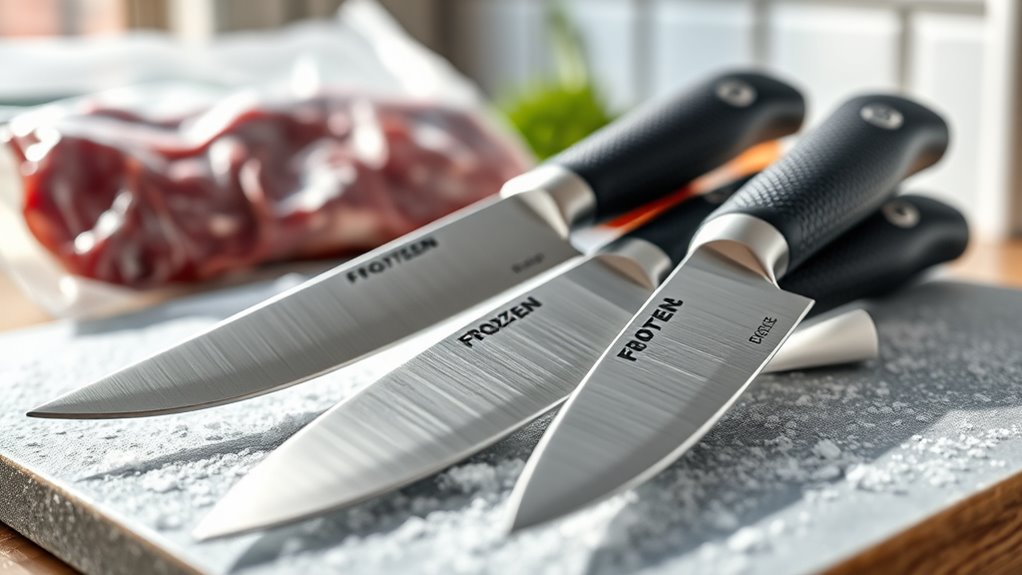
When you’re picking out a frozen food knife, it’s important to think about the blade material and the edge design. These factors really make a difference in how sharp and strong the knife will be. Also, don’t overlook the handle—comfort is key because it affects how well you can control the knife and how easy it is to use.
Plus, weight and balance play a big role too. A well-balanced knife feels better in your hand and makes cutting through frozen foods less of a chore. And of course, durability matters a lot. You want a knife that can stand up to those tough, frozen cuts without wearing down quickly. So, keep all these points in mind to find the perfect frozen food knife for your kitchen.
Blade Material Types
Choosing the right blade material plays a crucial role in how effectively your frozen food knife performs. Molybdenum stainless steel is a solid choice thanks to its toughness, rust resistance, and ability to maintain sharpness after heavy use. High-carbon stainless steel, common in premium knives, excels in edge retention and corrosion resistance, perfect for slicing through hard frozen items.
You’ll want to take into account the Rockwell hardness rating. Higher HRC means better durability and sharper edges, which is important for frozen foods. Flexibility matters too. Blades that bend slightly under pressure resist chipping or breaking.
Also, forged blades generally outperform stamped ones in strength and longevity, especially when tackling dense frozen foods. Picking the right material guarantees your knife stays sharp and durable, making frozen food prep much easier.
Edge Design Importance
Although selecting the right blade material is essential, the edge design plays a likewise important role in how effectively your frozen food knife performs. You’ll want a sharp edge with the right angle to penetrate icy surfaces cleanly without damaging the food. A plain edge delivers smooth cutting action, ideal for slicing through hard frozen meat and vegetables with less effort.
If you’re right-handed, a single bevel edge offers precision and control, making tough cuts easier. The edge design also minimizes surface resistance, so your knife glides through frozen items rather than dragging. Combined with durable, high-quality stainless steel, a well-crafted edge keeps your knife effective longer.
This ensures you get the most from your frozen food knife in demanding kitchen conditions. So, paying attention to edge design really makes a difference in performance and ease of use. It’s not just about the blade material, but how that blade interacts with your frozen food.
Handle Comfort Factors
A well-designed edge won’t help much if the handle feels uncomfortable or awkward in your hand. When choosing a frozen food knife, focus on handle comfort factors like material and shape. Ergonomic grips offer better control and reduce hand fatigue during extended use.
Look for handles with textured surfaces to improve grip and prevent slipping, especially when dealing with icy foods. A full tang handle adds stability, enhancing comfort by keeping the knife balanced. The shape should fit your hand naturally, allowing a secure grip that minimizes strain and boosts maneuverability.
Weight And Balance
When you handle a frozen food knife, its weight and balance can make all the difference in your cutting experience. Heavier knives often deliver the force needed to slice through dense, frozen items, but too much weight can make them hard to control. On the other hand, knives that are too light might lack the heft required for effective cutting.
A well-balanced knife feels comfortable and stable, with weight evenly distributed between the blade and handle. This balance improves maneuverability and reduces fatigue during extended use. Since everyone’s cutting style varies, it’s essential to choose a knife that suits your personal preference in weight and balance.
Finding that sweet spot helps you cut precisely and work efficiently with frozen foods. It really comes down to what feels right in your hand. So, take your time picking a knife that matches your style and needs.
Knife Durability Features
Since you rely on your knife to handle tough frozen foods, durability becomes a top priority. Look for knives made from high-quality materials like molybdenum stainless steel, which resist rust and corrosion.
Forged construction bolsters strength, making the blade less likely to chip or break under pressure. Pay attention to the blade’s hardness rating; around 60 HRC guarantees it stays sharp and wear-resistant longer.
Handcrafted edges with a mirror polish not only look great but improve cutting efficiency and blade longevity. Also, choose knives with ergonomic features like full tang construction and comfortable handles to enhance control and reduce fatigue.
These durability features guarantee your knife performs reliably and lasts through heavy, frozen food use.
Maintenance And Care
Maintaining your frozen food knife properly guarantees it stays sharp and reliable for every use. Always hand wash the blade with mild soap and dry it immediately to prevent rust and damage caused by harsh dishwasher detergents and high temperatures. Check the blade regularly for rust spots and clean them promptly.
Keep your knife sharp by using a honing steel or whetstone, as even the best blades dull with frequent use. Store your knife in a protective sheath or a designated knife block to shield the edge from accidental nicks. Finally, follow the manufacturer’s care instructions closely to avoid voiding warranties and make sure your knife performs at its best over time.
Proper maintenance extends the life and effectiveness of your frozen food knife. So, taking a little extra time to care for it really pays off in the long run.
Safety Mechanisms Included
Although frozen food knives are designed for tough tasks, their safety features play an essential role in preventing accidents during use. When choosing a knife, look for safety lock buttons that stop accidental activation, especially for electric models.
A blade release button is handy, letting you remove blades quickly and safely with just one press. You’ll also want an ergonomic handle to improve control and comfort, cutting down the risk of slips. Non-slip grips further guarantee you maintain a firm hold, even when working with frozen, hard foods.
Finally, pick a knife that meets industry safety standards. These features work together to keep you safe while making frozen food prep easier and more efficient.
Intended Food Types
Safety features keep you protected, but choosing the right frozen food knife also means matching the blade to the types of foods you’ll be cutting. Some knives are designed specifically for semi-frozen meats or hard vegetables like pumpkin. Selecting a blade made from high-quality stainless steel, such as molybdenum stainless steel, guarantees durability and rust resistance when slicing through tough frozen items.
If you’re right-handed, a single bevel edge can offer better precision. Consider the knife’s weight, too. A lighter knife gives you more control, while a heavier one delivers extra force to cut harder foods.
Don’t overlook the handle’s ergonomics. A comfortable grip helps you maintain control and reduce fatigue as you work through frozen, stubborn ingredients.
Frequently Asked Questions
Can Frozen Food Knives Be Safely Used on Non-Stick Cookware?
You shouldn’t use frozen food knives on non-stick cookware because their sharp, rigid blades can easily scratch and damage the coating. If you want to protect your non-stick pans, stick to softer utensils like silicone or wooden tools.
Using frozen food knives on non-stick surfaces may reduce their non-stick properties and shorten their lifespan. So, it’s better to keep those knives for tougher tasks on safe materials.
How Do I Properly Sharpen a Frozen Food Knife?
Think of sharpening your frozen food knife like tuning a guitar. Precision really matters.
To properly sharpen it, use a whetstone or ceramic sharpener at a 20-degree angle. Start with a coarse grit to reshape the edge, then switch to a finer grit to polish it. Make sure to keep consistent pressure and angle for an even edge.
With regular sharpening, your knife will slice through frozen foods effortlessly. It’s kind of like how a well-tuned guitar hits every note perfectly.
Are Frozen Food Knives Dishwasher Safe?
Most frozen food knives aren’t dishwasher safe because the harsh detergents and high heat can damage the blade and handle. You’ll want to hand wash your knife with warm, soapy water right after use and dry it thoroughly to prevent rust and maintain sharpness.
Taking this extra step keeps your knife in great shape longer. That way, you can confidently tackle frozen foods without worrying about damaging your tool. It’s a simple habit that really pays off!
What Is the Best Way to Store Frozen Food Knives?
You should store frozen food knives in a dry, safe place like a knife block or magnetic strip to keep them sharp and prevent accidents. Make sure they’re clean and completely dry before storing to avoid rusting.
Avoid tossing them loosely in a drawer, as that can dull the blade and damage the knife. Using blade guards or sheaths adds extra protection, keeping your knives in top condition and ready for your next cooking session.
Can Frozen Food Knives Be Used for Other Kitchen Tasks?
Yes, you can use frozen food knives for other kitchen tasks, but keep in mind they’re designed specifically to cut through hard, frozen items. They might not perform as well or be as precise for delicate tasks like slicing soft fruits or vegetables.
If you try using them on softer foods, you risk dulling the blade faster. It’s best to reserve these knives for frozen foods to maintain their sharpness and effectiveness. That way, they’ll last longer and do their job better.
Conclusion
Choosing the right frozen food knife is like finding a trusty sidekick in your kitchen battles. Whether you prefer the precision of the TSUBO YOSHIKANE stainless steel blade, the effortless glide of the BLACK+DECKER electric carving knife, or the raw power of the Kitory meat cleaver, your perfect match is out there.
Keep your grip firm, consider your needs carefully, and slice through frozen meals like a hot knife through butter every time. With the best frozen food knife, you’ll make every frozen meal prep easier and more efficient.

- 12 Best Rated Air Fryers for Home Cooking in 2026 - April 22, 2026
- 12 Best Air Fryers to Buy for Home Use in 2026 - April 22, 2026
- 11 Best Air Fryer Buying Guides for Beginners in 2026 - April 22, 2026